normal end tidal co2 levels
Arterial CO2 tensions PaCO2 increased from 17 to 58 mm Hg. These values are approximately 14 the normal EtCO2 35-45 mm Hg and ideal CPR will provide at least 14 of cardiac output.

Transcutaneous Co2 Versus End Tidal Co2 In Neonates And Infants Underg Mder
Internal carotid blood flow ICBF was measured at normal CSFP and at hydrostatically maintained 50 mm Hg CSFP.
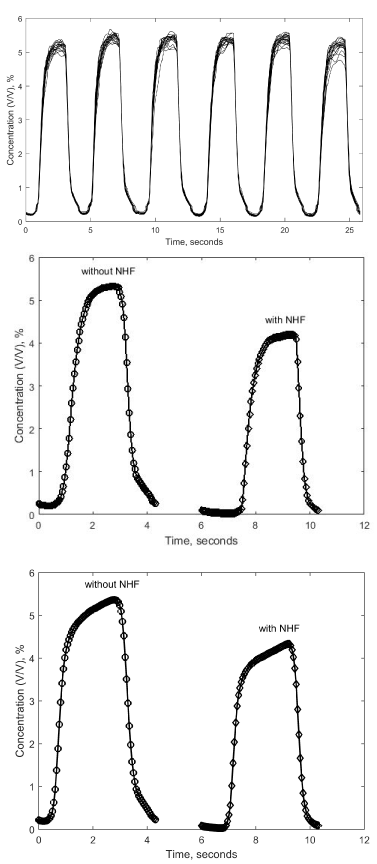
. End tidal CO 2 monitoring is represented as a number and a graph on a monitor. Table of Contents. Knowledge bank By Perfect answer.
ETCO 2 levels reflect the adequacy with which carbon dioxide. The number is called capnometry which is the partial pressure of CO 2 detected at the end of exhalation. EtCO 2 levels that rise from a normal baseline.
The purpose of the present study was to determine the value of end-tidal CO2 EtCO2 in screening for sleep apneas. Repiratory rate AND depth tidal volume which determine minute ventilation and therefore arterial CO2. Levels of end-tidal carbon dioxide are low despite normal respiratory rate in individuals with long COVID.
So the short answer is you are. Normal minute ventilation about 200 mlkgmin for dogs and cats in conscious animals. End-tidal CO2 EtCO2 monitoring is a noninvasive technique which measures the.
Normal EtCO 2 levels range from 30s and 40s but this may vary based on the patients underlying respiratory and metabolic status. What is the normal range for end-tidal CO2. Although the normal range for CO2 should be between 35-45mmHg CO2 monitoring gives healthcare providers a lot more insight into what is going on with a patients condition.
Thirty-nine patients referred to our sleep laboratory because of. The level of CO 2 gradually rises during exhalation showing an approximate equalization with the CO 2 value in alveoli in the lungs hence the phrase end-tidal. The median ETCO 2 value was 32 mmHg IQR 27 38 mmHg range 18-80 mmHg.
For a person with normal lungs the difference between end tidal and Paco2 can vary between 5-8mmHg depending on the book your reading. At the end of exhalation or end-tidal CO2 ETCO2 the amount of CO2 is usually 35-45 mm HG. This is an example of capnography during CPR.
In the awake adult normal cardiac index lies between 25-4 Lminm2 with an ETCO2 of 35-45 mmHg. Levels of end-tidal carbon dioxide are low despite normal. End-tidal carbon dioxide ETCO 2 is the level of carbon dioxide that is released at the end of an exhaled breath.
2 to near normal normal EtCO 2 35-45 mmHg represents marked increase of CO 2 delivery to lungs suggesting ROSC If patient develops an organized rhythm after VFVTasystole check. On average during CPR if adequate chest compressions are being. Forty-six of 96 48 95 confidence interval CI 38 58 patients had abnormal ETCO 2 values including.
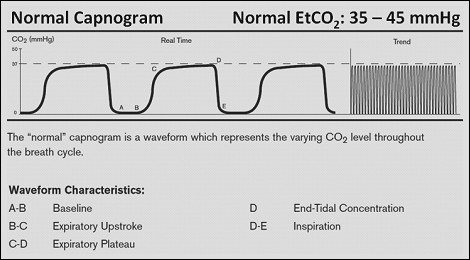
R Series Advanced Monitoring Capnography Waveforms Zoll Medical
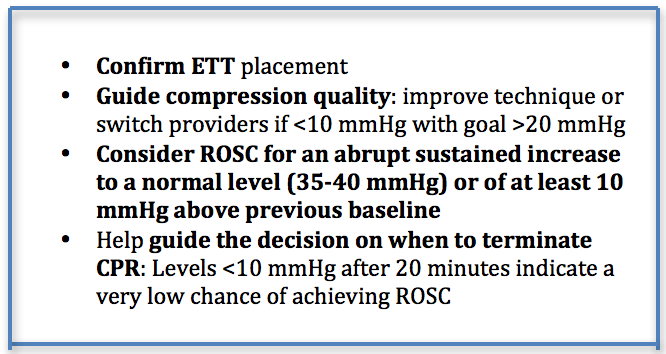
Emdocs Net Emergency Medicine Educationcapnography In The Ed Emdocs Net Emergency Medicine Education

Potential Applications Of Capnography In The Prehospital Setting Journal Of Paramedic Practice

Waveform Capnography In The Intubated Patient Emcrit Project
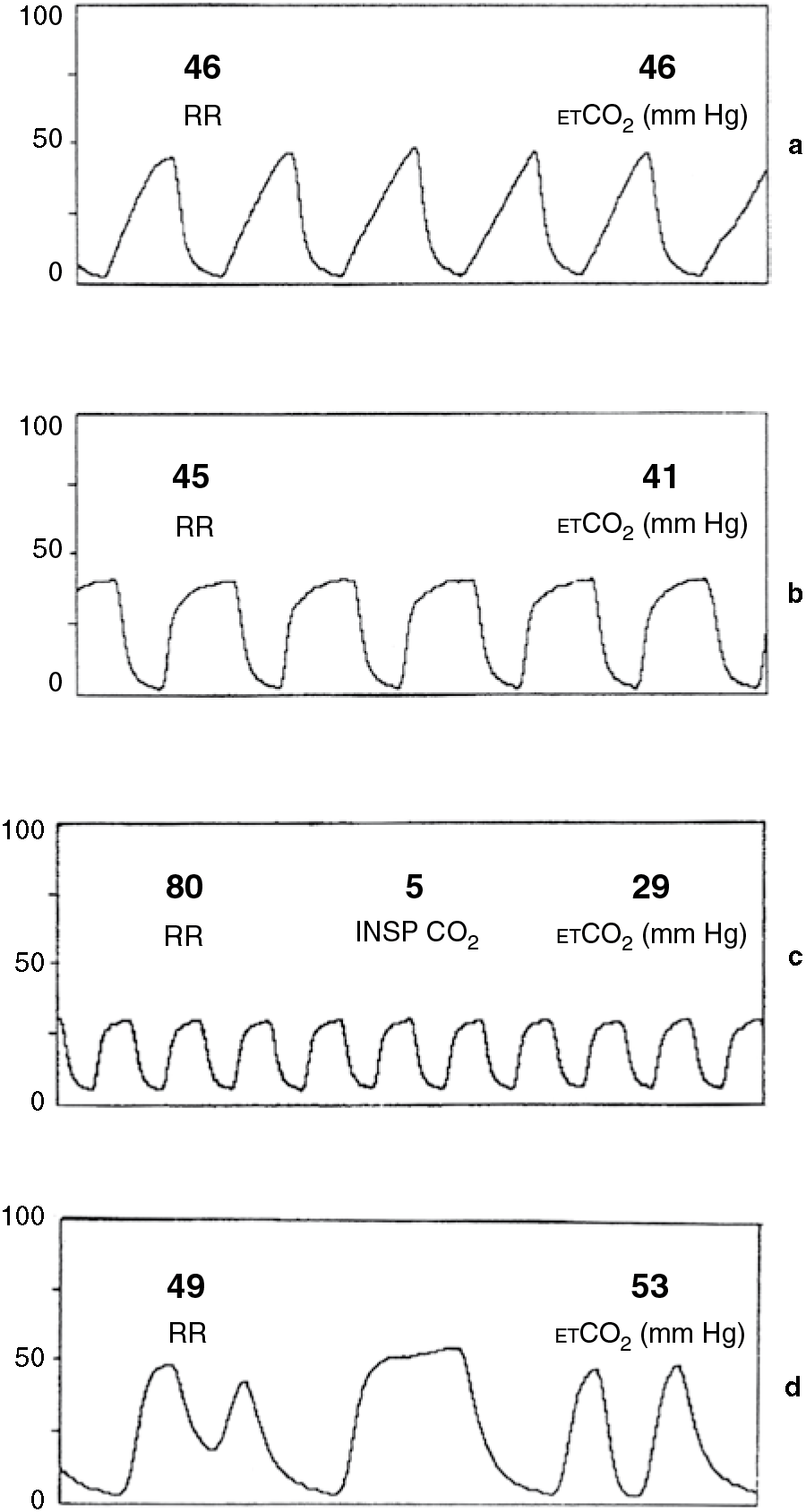
Neonatal Monitoring Chapter 10 Capnography

End Tidal Co2 In Cardiopulmonary Resuscitation Etco2 In Cpr

Average Etco2 Kpa During Cpr In Patients With Or Without Rosc Download Scientific Diagram
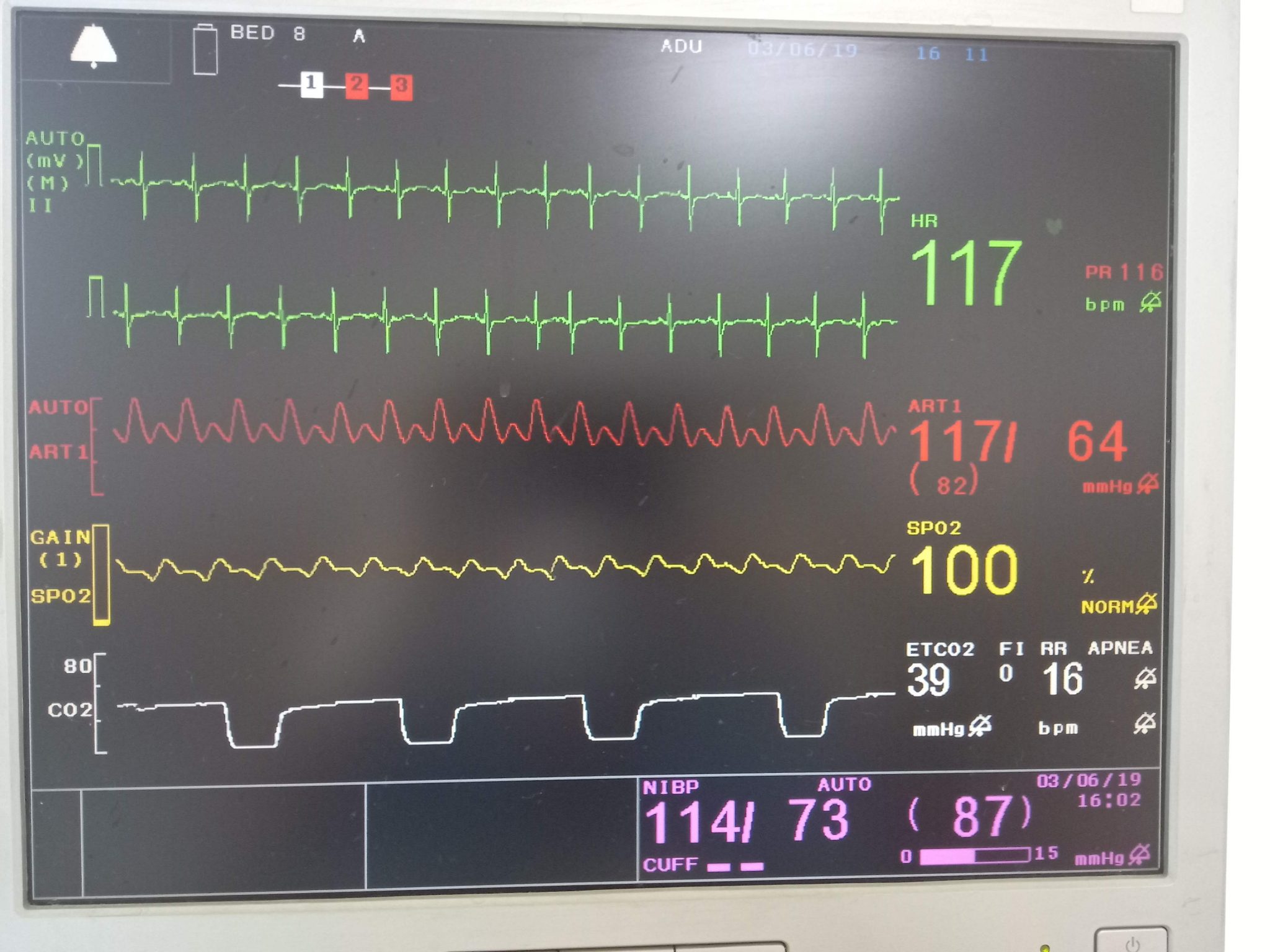
Capnography End Tidal Co2 Measurement Surgicaltechie Com

Uses Of Capnography In The Critical Care Unit Bja Education
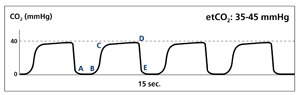
5 Things Ems Should Know About Waveform Capnography

Basic Waveform Capnography As A Continuous Monitoring Tool During Mechanical Ventilation

Bedside End Tidal Co2 Tension As A Screening Tool To Exclude Pulmonary Embolism European Respiratory Society

Etco2 Valuable Vital Sign To Assess Perfusion The Airway Jedi

Waveform Capnography In The Intubated Patient Emcrit Project

The Normal Capnograph Waveform Deranged Physiology
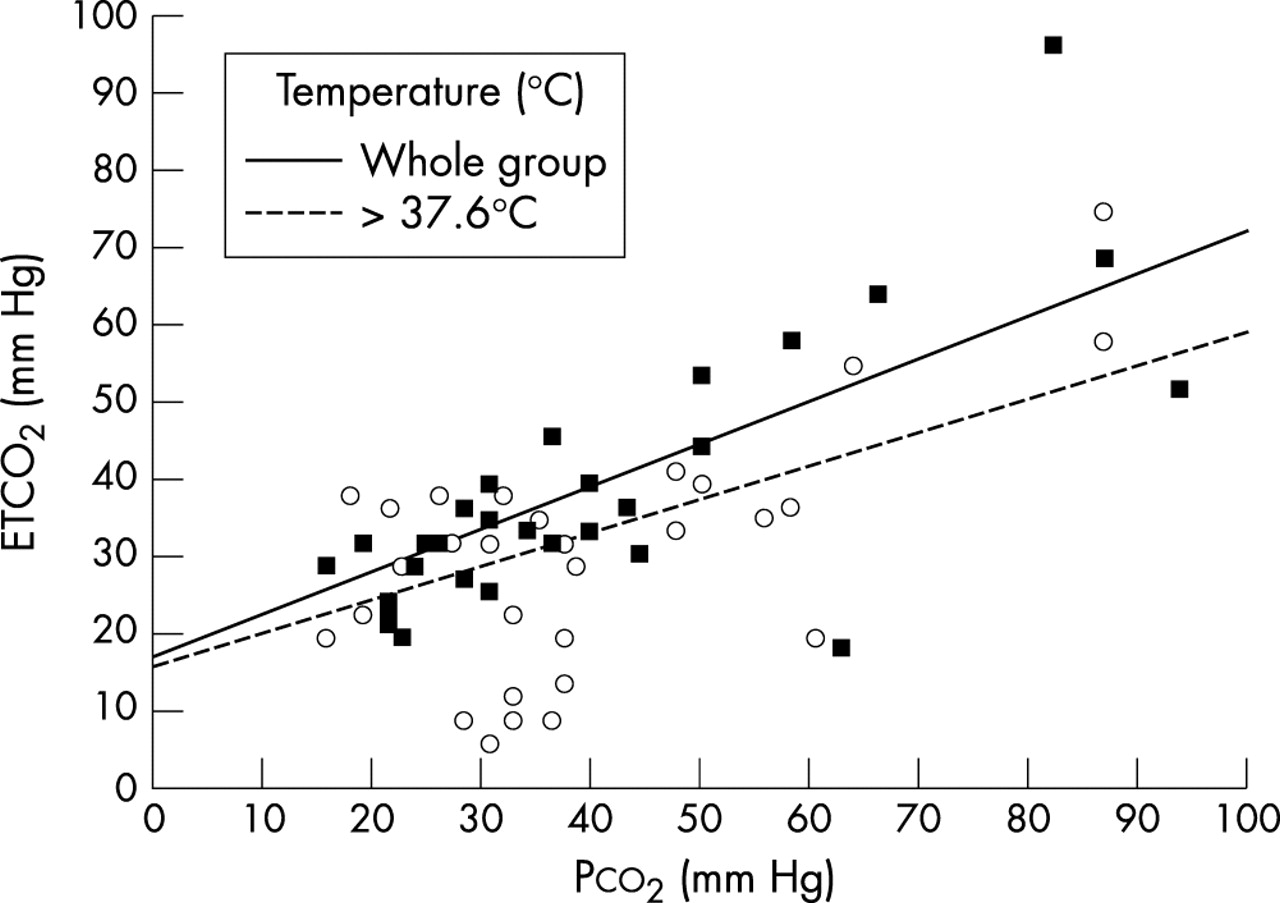
End Tidal Carbon Dioxide As A Predictor Of The Arterial Pco2 In The Emergency Department Setting Emergency Medicine Journal

Diagram Of A Normal Capnogram That Includes The Inspiratory And Download Scientific Diagram

Learn More With This Respiratory Article By Melissa Marshall

Monitoring Ventilation With Capnography Nejm